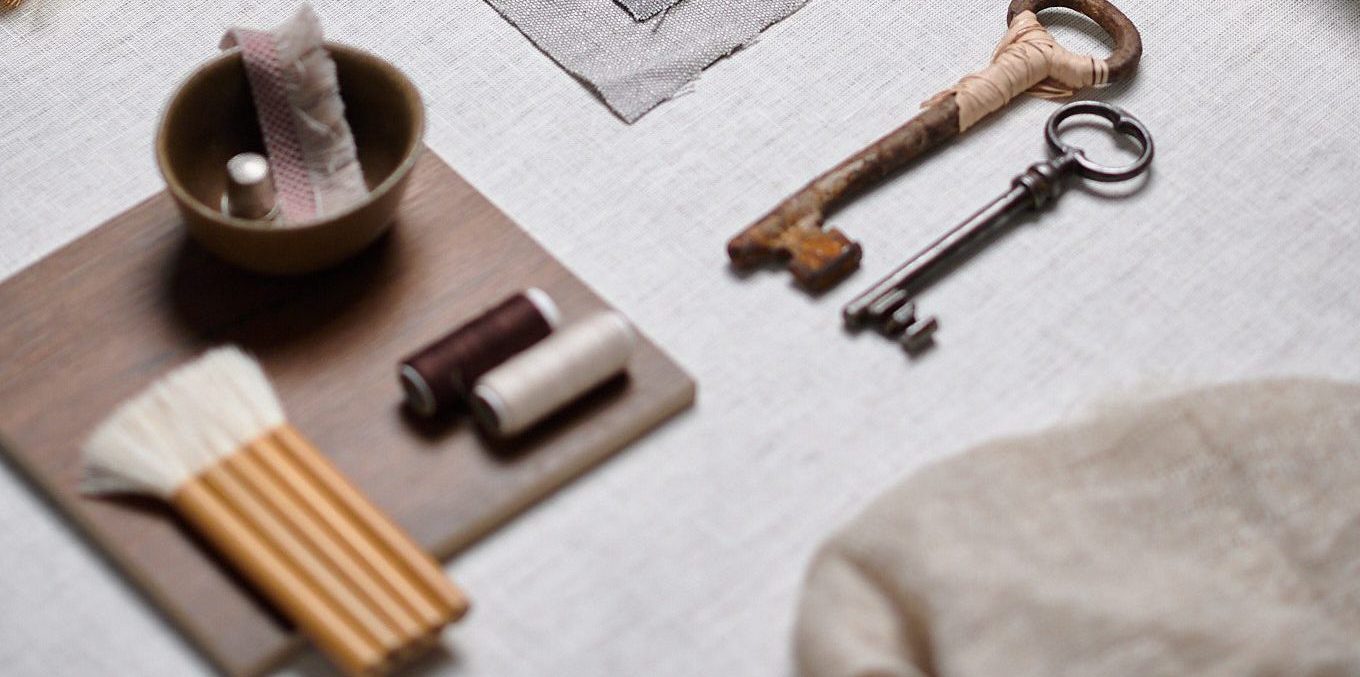
Introduction to Wabi Sabi: origins and philosophy
The term Wabi-Sabi has its roots in ancient Buddhist Zen wisdom and reflects a deep appreciation for the ephemeral beauty and imperfection of the natural world.
- Wabi alludes to a rustic simplicity, tranquility, and an authenticity that comes from asymmetry and irregularity.
- Sabi represents the beauty or serenity that accompanies the passage of time, where scars and the patina of use are valued.
Together, Wabi Sabi teaches us to find harmony and elegance in the imperfect, the incomplete, and the transient, inspiring a deeper connection with the environment and the realities of life.
Here are some recommendations:
- Make conscious choices: choose antique pieces that tell a story and combine them with modern and simple lines.
- Respect the color palette: choose neutral tones so that old and new can coexist without competing.
- Play with textures: incorporate worn objects with smooth surfaces, introducing tactile contrasts that are essential to Wabi Sabi.
- Strive for balance: arrange objects carefully, avoiding visual overload and seeking a dialog between periods.
- We prioritize natural light: this is key to highlighting the imperfect beauty of each object, whether old or new.

Wabi Sabi style as an inspiration for interior design
This Japanese philosophy celebrates the beauty of imperfection and the transience of life, principles that we apply to interior design through the selection of natural materials and organic textures that evoke feelings of serenity and warmth. Another option is the incorporation of handcrafted pieces that stand out for their unique imperfections, giving character and personality.
We focus on creating environments that invite reflection and appreciation of the authentic, where the imperfect and the unfinished become an aesthetic statement. By simplifying our spaces, Wabi Sabi teaches us to find beauty and tranquility in the serenity of the simple.
Textures and Materials: key elements in Wabi Sabi decorating

In Wabi Sabi home decor, textures and materials are fundamental. We focus on authenticity and simplicity:
- We look for natural, untreated materials that show their natural wear and tear and the passage of time. Wood, stone, clay and natural fibers are ideal.
- For textiles, we prefer natural fabrics such as linen or cotton, appreciating the irregularities of the weave.
- We complement spaces with handcrafted ceramics or oxidized metal elements that reveal a unique, imperfect beauty.
- We opt for matte finishes and neutral colors that integrate harmoniously rather than distract, allowing each texture and material to speak for itself.
- Wall decor should be in neutral colours.
“Less is more”
To decorate your home in the Wabi Sabi style, we recommend following these principles:
- Choose furniture and objects that are simple and functional, without excess or waste. Choose pieces that have a minimalist design but are comfortable and practical.
- Choose natural and neutral colors such as white, beige, gray or brown. These colors convey calm, balance and serenity. You can also add a few splashes of more vibrant colors, such as green, blue or red, to create contrast and dynamism.
- Use textures such as wood, clay, linen or cotton. These materials are environmentally friendly, durable and warm.
- Apply the “less is more” rule, emphasizing quality over quantity. Do not overload the space with too many elements, but let each piece breathe and have its own prominence. This will create a more spacious, orderly and luminous environment.
- Give importance to objects that have a history, embracing their flaws as essential components of their character. Value objects that hold a story, embracing their flaws as integral components of their identity. Don’t get rid of things that have sentimental value or remind you of a special moment. On the contrary, display them with pride, even if they are broken, worn, or damaged. You can repair them with techniques such as kintsugi, which involves joining broken pieces with gold to create a unique and precious effect.
Incorporating imperfect accessories: seeking beauty in imperfection
By embracing the wabi-sabi aesthetic, we value the uniqueness of each piece with its history and character. Often these elements include worn textures or natural materials. Handcrafted ceramics with subtle irregularities in shape and glaze, or furniture that reveals the passage of time, such as a chest of drawers with peeling paint. Works of art that capture the essence of impermanence and simplicity. These accessories not only add visual interest, but also tell a story, inviting contemplation and appreciation of the natural beauty of aging.
To capture the essence of Wabi-Sabi in lighting, we encourage the use of natural light. However, for times when natural light is insufficient, we suggest:
- Use lamps with organic materials and simple designs that cast soft, warm shadows.
- Choose low-intensity bulbs to create a soft and cozy atmosphere.
- Incorporate candles to add a touch of serenity and warmth, emphasizing a connection with nature and the ephemeral.
These tips will help create a harmonious and soothing atmosphere.
Fabrics for a minimalist interior with the Wabi Sabi philosophy
Les Créations de la Maison proposes a nod to oriental culture and, more specifically, to the Wabi Sabi concept. In this world, a great variety of objects coexist with similar characteristics, where the beauty lies in the irregularity of each one:
The WABI collection of Les Créations de la Maison proposes the Wabi Sabi style with natural fabrics for interior decoration.
Shizen fabric, a name that means nature, but also that which is spontaneous, not artificial, not forced, are qualities that are perfectly reflected in this exceptional fabric. This stunning chenille ottoman with a subtle two-tone effect and soft finish is characterized by its heavy weight and lush texture. Part of its beauty lies in its irregular character, making it an authentic representation of nature itself. It is also available in eight captivating colors that coordinate perfectly with the other offerings in this collection. It is ideal for bedding, accessories, curtains and upholstery.
Another alternative is the Sabi Jacqard from Les Créations de la Maison, made with an attractive wool bouclé yarn in the weft, woven on a linen base, inspired by Zen philosophy. The result is a fabric with a rich and imposing structure that is also extremely pleasant to the touch. This wabi sabi fabric evokes the nostalgia of vintage fabrics.

100% Yugen linen is another example of the wabi-sabi philosophy. Printed on an elegant viscose linen base, it has a pleasant delavé finish for exceptional softness. Named Yugen in honor of its profound meaning, this fabric captures the essence of this notion, suggesting that fabrics hide a hidden beauty that reveals itself little by little, revealing mystery, depth and subtlety. Moreover, it is perfect for upholstery as well as curtains, cushions and other accessories, making it a versatile choice for decorating with elegance.
Following this idea of cultivating the imperfect, Les Créations de la Maison has created WA sheer, a sheer wool/linen blend with an irregular weft in a width of 3 meters. Available in 4 colors, it has an austere look typical of this natural and sober Japanese aesthetic.